Loading image...

Radiant Heaters
Warmth, without compromise
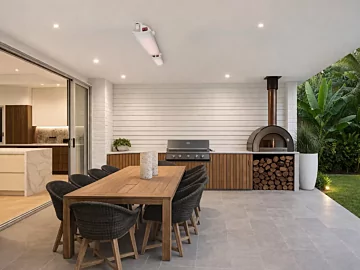
Radiant heaters deliver targeted warmth with even heat distribution, with no drafts and no cold spots, creating a quiet, allergy‑friendly ambience indoors and out. Engineered with infrared technology, HEATSCOPE® radiant heaters pair energy‑efficient performance with refined design, offering fast, comfortable heat and lower running costs for contemporary spaces.
Models
Showing 5 items of 5
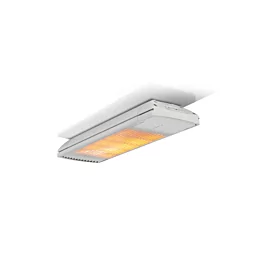
Spot 1600W Electric Radiant Heater
Spot 2800W Electric Radiant Heater
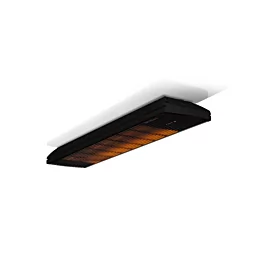
Vision 3200W Electric Radiant Heater
Pure+ 3000W Electric Radiant Heater
Next 3000W Electric Radiant Heater

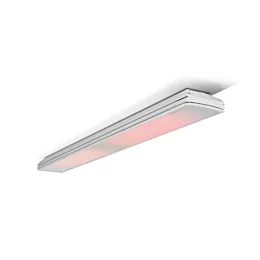
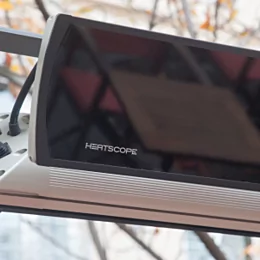
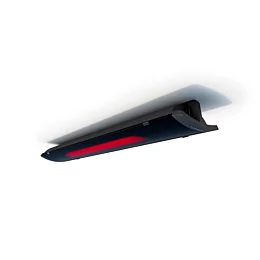
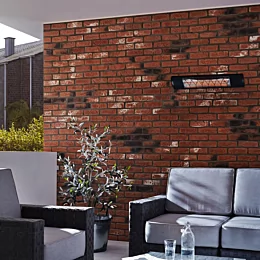
Loading image...

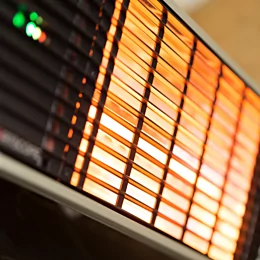
Carbon spiral heating technology
Dual carbon heating spirals power our radiant heaters with reduced visible light and a naturally cosy feel.
Loading image...


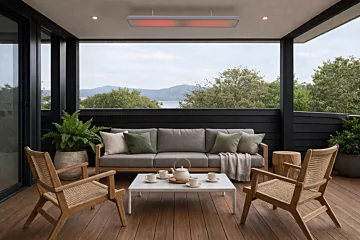
Energy‑efficient radiant heaters
HEATSCOPE radiant heaters convert 90–94% of energy into ambient warmth for low running costs and high comfort.
Loading image...

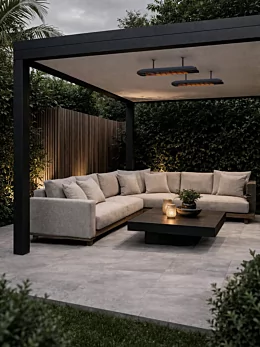
Rapid heat‑up times
Spot radiant heaters reach full output in about 15 seconds; Pure and Vision models ramp quickly owing to the glass‑ceramic front.
Two‑stage output control
Radiant heaters with 50% and 100% output modes via remote or hardwire for precise zone heating and energy optimisation.
Loading image...
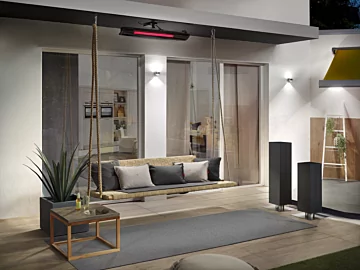
Outdoor‑ready IP protection
Pure radiant heaters are IP65 rated for exposed installs; Spot and Vision are IP24 for well‑covered areas.
Styled by Our Clients
Loading image...
Loading image...
Loading image...
Loading image...

Loading image...
Loading image...
Loading image...
Loading image...
Learn More
FAQ's
How do HEATSCOPE® radiant heaters compare to other outdoor electric heaters?
HEATSCOPE® radiant heaters deliver direct heat transfer using mid-wave infrared technology that penetrates the first skin layers, creating genuine sun-like warmth rather than surface heating. Unlike many electric outdoor heaters that rely on short-wave infrared producing bright red glows and uncomfortable high-intensity heat, HEATSCOPE® heaters use colour-matched grill screens to reduce light output to just 30-40% of traditional radiant heaters. The Spot series produces approximately 600 lumens (per product specifications), whilst the Vision and Pure Plus ranges deliver less than 300 lumens, preserving outdoor ambience without harsh brightness.
The engineering differences extend to durability and materials. HEATSCOPE® heaters use carbon fibre heating elements and, in the Pure Plus range, SCHOTT NEXTREMA® premium convex glass, a material exclusivity among electric infrared heaters. The Pure model achieves IP65 weather resistance (dust and waterproof), exceeding the typical IPX5 rating of competitors, ensuring reliable outdoor performance across seasons.
For connected home environments, an optional ZigBee Bridge enables wireless control, motion sensors for automated triggering, and compatibility with Alexa and Google Assistant. An optional WiFi Smart Switch adds smartphone app control. Dual power levels at 50% and 100% output allow precise zone heating for energy efficiency without waste.
How much does it cost to run a HEATSCOPE® outdoor heater per hour?
Running a weather-resistant HEATSCOPE outdoor radiant heater costs roughly the heater's wattage divided by 1,000, multiplied by your local electricity rate per kWh. A 3,000 W heater run for one hour uses 3 kWh, so at an illustrative rate of $0.20/kWh it costs about $0.60 per hour to run.
Per-hour figures across the range, at the same illustrative $0.20/kWh rate:
- 1,600 W compact heater: $0.32/hour at full output, $0.16/hour at 50%
- 2,800 W heater: $0.56/hour at full output, $0.28/hour at 50%
- 3,000 W heater: $0.60/hour at full output, $0.30/hour at 50%
- 3,200 W heater: $0.64/hour at full output, $0.32/hour at 50%
Actual cost depends on your local electricity rate, so replace the illustrative figure with your own tariff for an accurate calculation. A two-hour session at full output on a 3,000 W heater sits near $1.20 at that rate; running the same session at the 50% setting drops the cost to around $0.60.
Mid-wave infrared technology converts up to 94% of energy directly into directed warmth, with minimal energy lost to air or wind dispersion. That efficiency, combined with permanent outdoor installation and weather-resistant construction, is what keeps the cost per comfortable hour low across patios, terraces, and hospitality settings.
Are HEATSCOPE® outdoor heaters suitable for commercial hospitality use?
Yes, HEATSCOPE® weather-resistant infrared heaters are engineered for both residential and commercial applications, and are installed in restaurants, cafes, bars, and hospitality venues.
Commercial durability is built into the core components. Carbon fibre heating elements are rated for at least 10,000 hours of operation, and the aluminium chassis resists discolouration and tarnishing over years of continuous service. There are no ignition components, gas connections, valves, or hoses to maintain, reducing downtime and servicing complexity in high-use environments.
For multi-zone installations, a single remote pairs with multiple heaters, and ZigBee motion sensors automate zones to activate only when areas are occupied, helping manage energy use across large terrace or dining areas. All models accept wall and ceiling mounting, with extension rods in 100, 300, and 500 mm increments providing height flexibility across varying ceiling configurations such as marquees, pergolas, and outdoor dining pavilions.
For venue specification, HEATSCOPE®’s technical team provides schematic diagrams and tailored positioning guidance based on your space’s dimensions, wind exposure, and installation height. The general principle: more wind exposure and greater installation height call for higher-output models with stronger beam reach.
What types of outdoor radiant heaters are available?
Heatscope offers four ranges of weather-resistant electric infrared heaters, each engineered for different settings and design preferences. All use double carbon heating elements with two-stage output control and come in black or white with optional extension rods.
The Spot is the most compact, available in 1,600W or 2,800W, ideal for smaller spaces and directional warmth. Its ceramic glass front delivers radiant efficiency above 94%, with an IP24 rating suitable for covered outdoor areas.
The Pure Plus is the most weather-resistant in the range, rated IP65 for fully exposed outdoor installation. This 3,000W heater features a convex glass-ceramic front and won a Red Dot Design Award in 2018.
The Vision produces the highest output at 3,200W and runs the longest at 1,661 mm, creating ambient atmosphere alongside substantial warmth. Its minimal visible light (300 lm) suits settings where you want heat without visual prominence. It’s rated IP44.
The Next suits transitional spaces, including semi-enclosed terraces or indoor/outdoor transitions. Its 3,000W output and swivel-joint mount offer directional flexibility; its slim aluminium body fits tighter design schemes. It’s rated IP25.
All ranges include a 2-year warranty and optional ZigBee smart control.
Can outdoor radiant heaters be used in covered outdoor areas like pergolas?
Yes, weather-resistant outdoor radiant heaters are purpose-built for covered areas like pergolas, and a sheltered structure is the ideal setting for infrared heating. Because the heat travels in a direct beam to warm people and surfaces rather than the surrounding air, a pergola roof helps contain that warmth without the wind dispersion open patios experience.
Pergola installation comes down to clearances and mount choice. Heatscope models accept wall or ceiling mounting across the range, with a minimum 1,800 mm [70.9 in] clearance from the lower edge of the unit to the floor, and 200 mm [7.9 in] from any power source. When the pergola ceiling sits lower than standard, extension rods of 100, 300 or 500 mm drop the heater to the correct height. Timber pergolas are fine with Heatscope spacers, which maintain the recommended distance from combustible material. Installation must follow local electrical wiring standards and be carried out by a licensed electrician, connected through a residual current device (RCD).
What are the main advantages of HEATSCOPE® radiant heaters compared to gas-powered heating appliances?
Direct heat transfer is the defining advantage of HEATSCOPE® radiant heaters. Unlike gas heating, which heats the air first and loses warmth to wind and surroundings, infrared heaters beam radiant heat directly to people and objects. You feel warmth in seconds rather than minutes, and wind does not steal the heat, a critical edge in outdoor settings.
Beyond heat delivery, electric infrared eliminates the infrastructure demands of gas. No gas lines, no flue or ventilation requirements, no specialist fitters. Wall or ceiling mounting takes two screws and a 220-240V circuit, freeing floor space and keeping heaters out of reach. Zero combustion byproducts mean the units are safe for enclosed outdoor spaces (patios under pergolas, covered dining areas, outdoor rooms) where ventilation limits would rule out gas.
The reliability advantage is significant. No valves, ignition components, or burners to service. No annual maintenance, seasonal prep, or gas-pressure issues. Silent operation with no fans stirring dust or allergens. One installation and the heater runs flawlessly year after year: the set-and-forget simplicity that appeals to hospitality operators and discerning homeowners alike.
When you compare the total ownership experience, including instant heat, no emissions, design freedom, and zero-service reliability, the case for radiant electric is compelling.
What is the difference between a radiant heater and a convection heater for outdoor use?
Weather-resistant radiant heaters warm people and surfaces directly through infrared waves, while convection heaters warm the surrounding air, making radiant the practical choice for outdoor use. Air is largely transparent to mid-wave infrared, so the energy travels through open space and is absorbed by skin, tables, floors and nearby objects, much like warmth from the sun on a cool day.
Convection relies on still air to build a pocket of warmth around you. Outside, that pocket drifts away on the first breeze, taking comfort with it.
Heatscope's carbon spiral technology converts up to 94% of its energy into directed infrared heat, so warmth holds its focus even in exposed patios, courtyards and open-fronted venues. Start-up is near-instant, and because there is no flue or ventilation requirement, placement follows the design of the space rather than the other way around.
Which HEATSCOPE® radiant heater is best for my space?
The best HEATSCOPE radiant heater for your space depends on three practical factors: the location's exposure to weather, the size of the zone you're heating, and your aesthetic preference.
If your space is fully exposed to outdoor elements, such as a rooftop, deck, or open patio, the Pure Plus model's IP65 rating and all-weather design make it the most resilient choice. For semi-covered areas like sheltered patios or balconies, the Spot delivers compact, rapid heat-up (under 15 seconds) across an 8 m² zone, or choose the Vision for larger spaces needing 11 m² coverage with minimal light output from the ceramic glass front.
Consider how you experience the space. The Spot and Vision both offer IP24 weather protection, whilst the Spot's smaller form factor suits intimate areas and the Vision's 1,661 mm width creates a more substantial focal point. All three operate at dual 50/100% power settings and deliver heat in 15-60 seconds depending on the model.
Discuss your specific location, intended installation position, and aesthetic priorities with our specialists, who will recommend which model aligns with your project needs.
How many amperes do HEATSCOPE® radiant heaters draw?
- HEATSCOPE® radiant heaters draw between 6.96 and 13.91 amperes at full power, depending on the wattage rating of your model. The Spot 1600W draws 6.96A; the Spot 2800W draws 12.17A; the Vision 3200W and Pure 3000W both draw approximately 13A at 100% power.
All HEATSCOPE® models operate on 220–240V single-phase supply at 50–60Hz. Most models feature dual power stages, which means you can also run them at 50% power; at this setting, the current draw reduces proportionally. For example, a Vision 3200W operating at 50% would draw roughly 6.95A instead of the full 13.91A.These specifications are essential for circuit planning. Confirm your installation supports the required amperage with a qualified electrician before commissioning the heater.
Does radiant heating affect air quality?
No, radiant heating does not degrade indoor air quality. Heatscope Heaters use mid-wave infrared radiation, which transfers heat directly to solid objects (people, furniture, and floors) without heating the air itself. This fundamental difference from forced-air heating systems creates distinct air-quality benefits.
Because radiant heaters have no fan or blower, there is no convection to disturb dust, pollen, or other particulates. The sealed construction (IP25–IP65, depending on model) prevents internal particulate accumulation. There are no combustion byproducts, ventilation requirements, or filters to maintain.
Radiant heating also does not alter humidity levels the way forced-air systems do. You get even thermal comfort without the dry-air side effects common to traditional heating. For users with allergies or asthma, the absence of air circulation and combustion makes radiant heaters a practical choice for creating a quieter, cleaner indoor environment.